
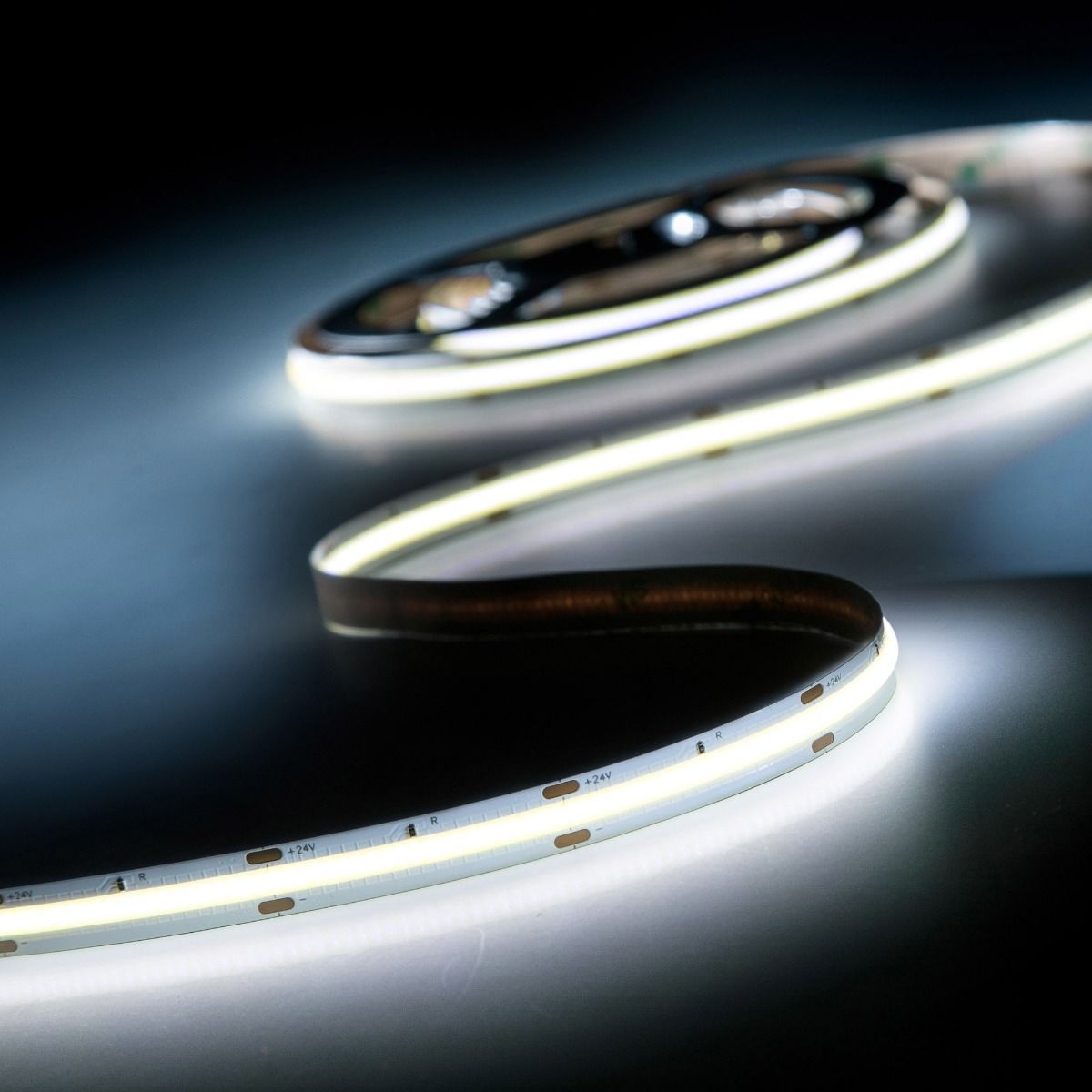
LED technology has long ceased to be a novelty and has become the standard for modern lighting. LED lamps can be found in homes, offices, streets, and industrial spaces. But many still wonder: does LED lighting actually save electricity or is it just a marketing ploy? Let's explore how LED lamps work, how much they save, and whether switching to them is really worth it.
How LED Lighting Works
LED (Light Emitting Diode) is a light-emitting diode that converts electrical energy directly into light. Unlike incandescent lamps, where most of the energy is wasted as heat, LED systems use almost all of their energy for lighting.
The efficiency of LEDs reaches 90-95%, making them several times more efficient than traditional light sources.
Example of savings calculation
Let's assume an apartment has 20 60-watt bulbs that burn for an average of 4 hours per day.
Consumption of old bulbs: 20 x 60 x 4 = 4800 Wh (4.8 kWh) per day.
10-watt LED bulbs: 20 x 10 x 4 = 800 Wh (0.8 kWh) per day.
The difference is 4 kWh daily.
If the tariff is 2.5 UAH/kWh (or about $0.07), the savings will be 10 UAH per day, and about 300 UAH ($8) per month. Over a year, that's more than 3,500 UAH (about $100) on lighting alone.
Is switching to LED lighting worthwhile?
The question of whether switching to LED lighting is worthwhile worries many. After all, LED lamps are more expensive than conventional ones, and it's important to understand how quickly the investment will return.
The average price of a high-quality lamp is 150-200 UAH, while an incandescent bulb costs about 20 UAH. However, the lifespan of an LED is 30,000-50,000 hours, compared to 1,000 hours for an incandescent bulb.
If the bulb is on 4 hours a day:
- An incandescent bulb lasts about 250 days,
- An LED bulb will last up to 20 years.
Even taking into account the higher cost, LED lighting pays for itself in 6-12 months thanks to energy savings and the lack of frequent replacement.
Myths about LED Bulbs
Despite the obvious advantages, many misconceptions still surround LEDs. Let's debunk the most common myths about LED lamps.
Myth 1: LED lamps are harmful to your eyes
In reality, only cheap, uncertified models with a low color rendering index (CRI below 80) and flickering can be harmful. High-quality LED lamps provide a stable light output without stroboscopic effects and are safe for your eyes.
Myth 2: LEDs don't generate heat
This isn't entirely true. LEDs do generate less heat than incandescent lamps, but they still generate heat. The difference is that it's not the light element itself that heats up, but the heat sink. That's why it's important that the lamp housing is ventilated and not tightly sealed.
Myth 3. LEDs burn out quickly
The reason for rapid failure may not be the diode itself, but a poor-quality driver or poor cooling. High-quality lamps can last tens of thousands of hours.
Myth 4. LED light is too cold
Modern models are available in a variety of color temperatures—from warm white (2700-3000 K) to cool daylight (6000-6500 K). Warm and neutral shades, which are comfortable for the eyes, are often chosen for home use.
Advantages of LED Lighting
Besides saving money, LED technology offers a number of advantages:
- Durability. Up to 50,000 hours of brightness without fading.
- Safe. Free of mercury and other toxic substances.
- Instant on. No need to wait for the lamp to "warm up."
- Constant light. No flickering or noise.
- Compact. Suitable for any fixture and design.
Real benefits for your home
The answer to the question of whether LED lighting saves electricity is obvious—yes, it does, and quite significantly.
On average, a family using LED bulbs in all rooms reduces their electricity bill by up to 30% of their total monthly bill. Moreover, the quality of light is higher, and the frequency of bulb replacement is minimal.
Furthermore, switching to LEDs reduces the load on the electrical grid, which is especially important for older homes with outdated wiring.
Conclusion
LED lighting is not just a trendy technology, but a cost-effective and environmentally friendly solution. It truly helps save energy, pays for itself in a matter of months, and lasts for decades.
Myths about LED lamps are most often associated with outdated models or low-quality counterfeits.
In practice, switching to LED lighting pays for itself, providing up to 80% energy savings and making your home modern, safe, and comfortable.
If you're still unsure whether to replace your old lamps, the answer is simple: LEDs have already proven their effectiveness and are completely worth the investment.