LED Panels: A Modern Solution for Efficient Lighting
In recent years, LED technology has taken a leading position in the lighting market, and one of the most versatile solutions has become LED panels. They are used in residential and commercial premises, in offices, schools, medical institutions, and for decorative lighting. Ease of installation, uniform light distribution, cost-effectiveness and aesthetic appearance have made them popular among designers, electricians and end users.
In this article, we will consider what LED panels are, their advantages, types, areas of application and recommendations for selection.
What is an LED panel?
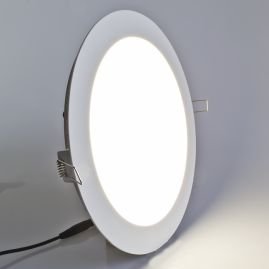
An LED panel is a flat light source in which the LEDs are evenly distributed over the entire area or perimeter of the housing. The light is diffused through the translucent panel, providing soft and even lighting without shadows and sharp glare. This makes the panels ideal for rooms where it is important to create comfortable conditions for vision.
Advantages of LED panels
1. Energy efficiency
LED panels consume 5-10 times less energy than incandescent lamps and 2-3 times less than fluorescent analogs. This is especially important for facilities with a large number of lamps - offices, retail spaces, educational institutions.
2. Uniform illumination
Thanks to the diffuser, the light spreads over the entire surface without dark spots, creating comfortable lighting even in large areas.
3. Durability
The average service life of an LED panel is from 30,000 to 50,000 hours. This is several times longer than traditional light sources.
4. Compactness and versatility
Panels are available in various sizes and shapes - square, rectangular, round. They can be built into the ceiling, suspended or installed surface-mounted.
5. Environmental friendliness
LED panels do not contain mercury or other harmful substances, do not emit ultraviolet or infrared light.
Types of LED panels
By installation method:
- Built-in panels.Used for Armstrong ceilings or suspended structures. Ideal for offices and retail spaces.
- Surface panels. Attached directly to the ceiling or wall. Often used in apartments, hallways, and staircases.
- Suspended. Installed on cables, used in rooms with high ceilings and in designer interiors.
By shape:
- Square (e.g. 600×600 mm) — standard for offices;
- Rectangular (e.g. 1200×300 mm) — for long corridors and work areas;
- Round — decorative lighting and living spaces.
By type of lighting:
- Daylight (4000K) - universal, comfortable for the eyes;
- Warm light (2700-3000K) - creates a cozy atmosphere;
- Cold light (6000K and higher) - improves concentration, suitable for workspaces.
Where are LED panels used?
- Offices and business centers. The panels provide uniform lighting, do not tire the eyes, are ideal for working with documents and screens.
- Living spaces. Used in the kitchen, bathroom, hallways and corridors. Round or rectangular panels fit organically into any interior.
- Retail areas and display cases. Bright light makes the product more attractive, increasing sales.
- Educational institutions. Uniform, flicker-free lighting improves concentration and reduces student fatigue.
- Medical institutions. Light without distortion and glare is a key factor for accurate diagnostics and patient comfort.
How to choose an LED panel: key parameters
- Power and luminous flux. The higher the power, the more light. For example, a 36 W panel typically produces 3200-3600 lumens. For an office, at least 300-400 lm/m2 is required.
- Color rendering index (CRI).The optimal indicator is at least 80 Ra, and in medical institutions and studios - from 90 Ra.
- Color temperature.It is selected depending on the purpose of the room:
- warm - for home,
- neutral - for educational and work spaces,
- cold - for shops and warehouses.
- Size and shape. The choice depends on the area of illumination, interior design and installation method.
- Driver type (power supply). High-quality panels are equipped with drivers with protection against overheating and voltage surges.
- Manufacturer. Reliable brands guarantee stable operation, durability and no flickering.
Installation and connection
Installing LED panels is quite simple:
- Built-in ones are mounted in ceiling cells;
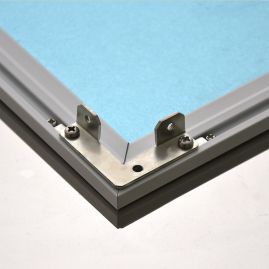
- Overhead ones are attached using a mounting frame;
- Suspended ones are fixed on cables and are adjustable height.
Connection is carried out via a driver that converts the mains voltage (220 V) to the required voltage (usually 36-42 V). It is important to observe the polarity and connect to the network only after installation.
Conclusion
LED panels (LED panels) are a practical, stylish and energy-efficient solution for lighting any type of premises. Their diversity allows you to choose the ideal option for an office, apartment, store or public institution. Ease of installation, durability and energy savings make the panels an ideal choice for both professional facilities and home use.