
Power supply for 24V LED strip: how to choose and connect correctly
LED lighting is becoming increasingly popular in both residential and commercial interiors. One of the key elements of the system is the power supply - without it, the LED strip simply will not work. In this article, we will take a detailed look at what a 24V LED strip power supply should be, how it differs from 12V models, and how to choose and connect it.
Why choose a 24V LED strip?
Although 12V strips are still widely used, more and more designers and electricians prefer 24V strips, and there are several reasons for this:
- Less voltage drop: 24V strips have less brightness drop in distant areas with long lines.
- Longer length without breaks: you can connect up to 10 meters of strip in one piece without visible loss of brightness.
- Less current — less heating: with the same power, the current is two times lower than that of a 12V strip, which reduces the load on the wires and power supply.
These advantages are especially relevant in projects with a large length of lighting: for example, in niches, facade lighting, commercial equipment and ceilings.
Why do you need a power supply for a 24V LED strip?
The LED strip is powered by low-voltage direct current. In most cases, it is 24 V DC. At the same time, the household electrical network is 220 V AC. The power supply performs two main functions:
- Converts 220 V AC to 24 V DC.
- Provides stable voltage and overload protection.
You cannot connect the strip directly to the socket — this will lead to immediate failure.
The advantage of most models of ”VERSO” power supplies is a wide range of input voltage from 100 to 250 volts, which is important in conditions of unstable and low voltage in the network.
How to choose the right power supply for a 24V strip
The correct choice of power supply is the key to safe and long-term operation of the strip. Below are the main parameters that you should pay attention to.
1. Voltage match
Make sure that the output voltage of the unit is strictly 24 V DC. No higher, no lower.
2. Power with a reserve
Calculate the total power consumption of your strip and add a reserve of 20-30%:
Formula: Power = Strip Length × Consumption W/m + reserve
Example:
Tape - 14 W/m × 5 meters = 70 W
With a reserve: 70 × 1.3 = 91 W
Choose a unit of 100 W or higher
3. Current (amperage)
Some units are specified in amperes. To calculate the required current:
Current = power / voltage
For example, 100 W / 24 V = 4.17 A
Main types of power supplies for 24V strip
There are different types of power supplies - depending on the installation location, power and operating conditions.
Open (lattice) units
- Used in dry rooms.
- Have good ventilation.
- Ideal for hidden installation: behind ceilings, in cabinets, niches.
- Powerful models (over 200 W) can have a built-in fan for improved cooling. When switched on, it creates additional air flow noise, this must be taken into account during installation, because such a power supply should not be installed in a bedroom or room where silence is important.
Important: cannot be used without insulation or in dusty/humid areas.
Sealed (IP67)
- Designed for damp rooms and outdoors.
- Suitable for bathrooms, kitchens, building facades, advertising structures.
- Resistant to water, dust, temperature changes.
Disadvantage: higher price and slightly higher heating than open models.
Pulse adapters
- Compact power supplies in a plastic case.
- Resemble chargers.
- Used for small pieces of tape (up to 3-5 meters).
Features of connecting the power supply
Correct installation of the power supply ensures not only stable operation, but also safety.
Observe the polarity
The unit and the strip always have "+" and "-". If connected incorrectly, the strip will either not light or fail.
Use suitable wires
For high currents, it is important to use wires with a cross-section of at least 0.75-1.5 mm2. Otherwise, losses and overheating are possible.
Do not overload the unit
Working at 100% power accelerates wear. It is better to choose a power supply with a reserve.
Do not connect several power supplies to one low-voltage circuit
The power of the units in this situation is not summed up, but falls entirely on one of the power supplies, leading to its overload.
Distance from the unit to the strip
Try to keep the length of the connecting cable minimal. If necessary, use signal amplifiers (amplifiers) or supply power to several points.
Activation of the power supply protection systems
™”VERSO” power supplies equipped with a number of protection systems:
- From short circuit
- From overheating
- From overload
In all these emergency situations, the power supply is switched off and switched on only after the cause has been eliminated. Such protection allows you to avoid emergency situations, fire and failure of the LED strip.
Advantages of 24V power supplies
- Allow you to implement long lighting lines without loss of brightness.
- More stable operation during network fluctuations.
- Lower current — less heating and higher safety.
- Suitable for professional projects and automation systems.
Tips for choosing
- For ceilings and furniture - take open blocks, but place them in ventilated niches.
- For the street or bathroom - only sealed IP67.
- Check the certification and the manufacturer - low-quality blocks are dangerous.
- Do not connect several powerful strips to one weak block - it is better to use separate sources.
Conclusion
The 24V power supply is the most important component when using LED strips for this voltage. The stability, safety and service life of the entire backlight depend on its quality and correct choice. Consider the power, operating conditions, installation method and do not skimp on reliability. The right power supply will ensure smooth light, no flickering and durability of your lighting system.

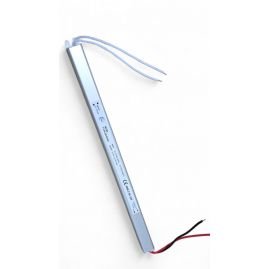
- Output power: 60 W
- Output voltage: 24V
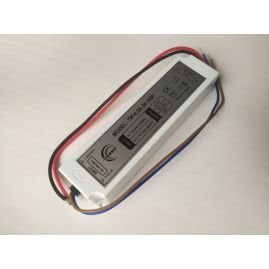
- Output power: 100 W
- Output voltage: 24V
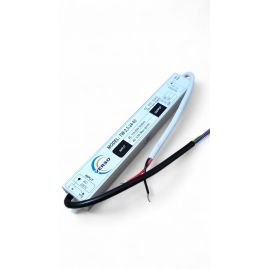
- Output power: 60 W
- Output voltage: 24V

- Output power: 60 W
- Output voltage: 24V

- Output power: 120 W
- Output voltage: 24V

- Output power: 150 W
- Output voltage: 24V

- Output power: 200 W
- Output voltage: 24V

- Output power: 240 W
- Output voltage: 24V

- Output power: 400 W
- Output voltage: 24V
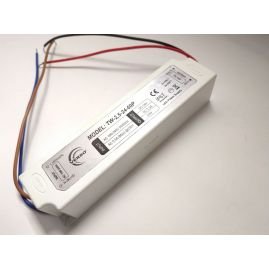
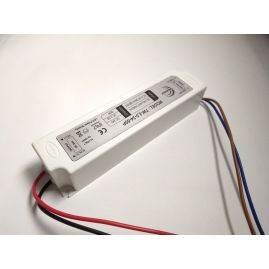
- Output power: 60 W
- Output voltage: 24 V
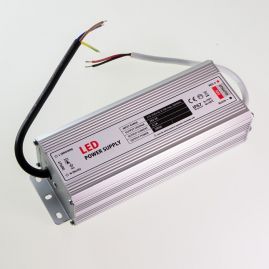
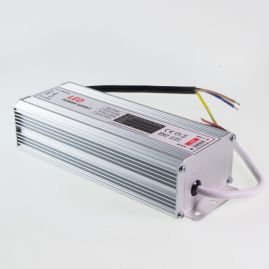
- Output power: 100 W
- Output voltage: 24V
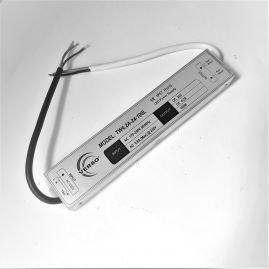
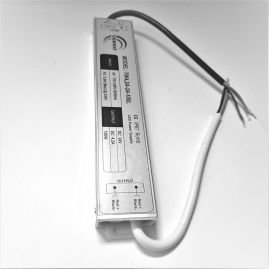
- Output power: 100 W
- Output voltage: 24V