
Power supply for 12V LED strip: how to choose and what to pay attention to
LED strips have become an integral part of our everyday life as an energy-efficient, stylish and versatile lighting solution. However, their operation is impossible without a stable and high-quality power source. A power supply for a 12V LED strip is not just a technical device, but one of the main elements of the entire lighting system. In this article, we will figure out why it is needed, how to choose it correctly and what types there are.
Why do you need a power supply for a 12V LED strip?
LED strips operate on low-voltage direct current - usually 12 or 24V. The supply voltage in a regular household network is 220V, alternating current, so it is impossible to connect the strip directly to the outlet. This is where the power supply (driver, adapter, transformer) comes in - it lowers the voltage and converts alternating current into direct current.
Without a power supply, the LED strip will either not work at all or will burn out in a split second.
Main parameters for choosing a power supply for an LED strip
In order for the LED system to work stably and for a long time, when choosing a power supply, you need to consider several key characteristics:
1. Voltage
The most important thing is that the power supply must output exactly the same voltage as indicated on the strip. If you have a 12V strip, choose a 12V power supply. Increased voltage will lead to overheating and failure, and decreased voltage will lead to a dim glow.
2. Power (W)
Calculating the required power is easy:
- Multiply the power of one meter of tape by its total length.
- Add 20-30% reserve for stable operation.
Example:
The tape consumes 12 W/m, the length is 5 m → 12 × 5 = 60 W
Taking into account the reserve: 60 × 1.3 ≈ 78 W
A power supply of at least 80 W is required.
3. Current (Amps)
The power of some power supplies is indicated not in watts, but in amperes. To convert amperes to watts:
Power (W) = Voltage (V) × Current (A)
For 12V and 5A: 12 × 5 = 60 W
Types of power supplies for LED strip
There are several types of power supplies, differing in form factor, degree of protection and purpose.
1. Open (perforated)
- Used in dry rooms.
- Have ventilation holes.
- Used for concealed installation: behind suspended ceilings, inside cabinets, in niches.
Pros: high power, good cooling.
Cons: no moisture protection, requires protection from dust and contact with hands.
2. Sealed (waterproof, IP67)
- Used in damp areas, outdoors, in bathrooms.
- Have a sealed case, protected from water and dust.
Pros: reliability, durability.
Cons: heats up a little more than open ones.
3. Adapters in a plastic case
- Similar to laptop chargers.
- Usually used for low-power tapes (up to 60 W).
- Often have a standard 5.5 × 2.1 mm plug.
Pros: compact, easy to connect.
Cons: limited power.
Features of connecting the power supply
Before connecting, it is important to consider the following points:
- Polarity: there are “+” and “–” at the output of the unit. Reversed polarity can damage the strip or controller.
- Distance to the strip: with long cables, voltage loss occurs - it is advisable not to exceed 2–3 m between the unit and the beginning of the strip.
- Wire quality: use wires of the appropriate cross-section, especially with a powerful strip.
- Cooling: do not hide the power supply in tight niches without ventilation - overheating reduces service life.
Choosing tips
- Take with a reserve - a power supply operating at 100% capacity wears out faster.
- Consider operating conditions - for outdoors and wet areas, choose models with IP65/67.
- Check certificates and build quality - cheap Chinese power supplies often do not meet the declared parameters.
- Plan a reserve for the length of wires and the installation location - especially when hidden behind the ceiling or furniture.
Frequently asked questions
Is it possible to connect several strips to one unit?
Yes, if the total power does not exceed the power of the unit. It is advisable to use splitters or terminal connections.
Is the power supply from another device suitable?
Only if it matches in voltage and produces sufficient power.
Why does the power supply heat up?
A little heating is normal. Strong heating indicates overload or poor cooling.
Conclusion
A power supply for a 12V LED strip is the basis for reliable and safe operation of the entire lighting system. Its choice should be justified by the parameters of the strip, operating conditions and power reserve. You should not save on this element - the service life of both the strip itself and the entire circuit directly depends on the quality of the unit. Choose a reliable unit - and your LED backlight will delight you for many years.

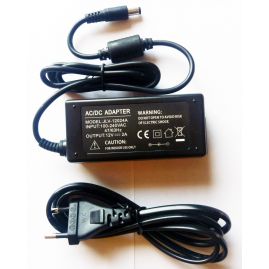
- Output power: 24 W
- Output voltage: 12V DC
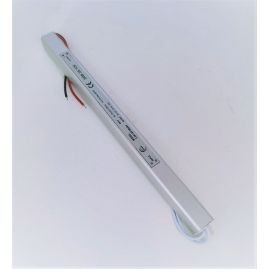
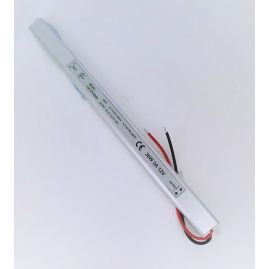
- Output power: 36 W
- Output voltage: 12V
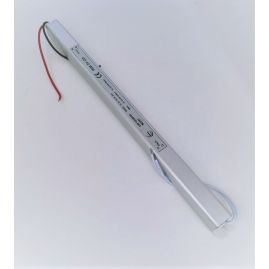
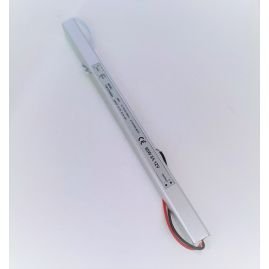
- Output power: 60 W
- Output voltage: 12V

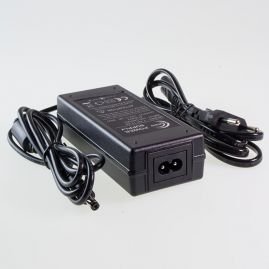
- Output power: 60 W
- Output voltage: 12V

- Output power: 24 (W)
- Output voltage: 12V

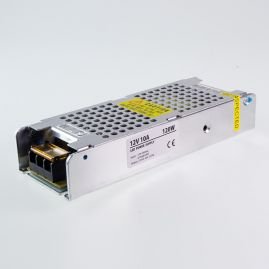
- Output power: 100 W
- Output voltage: 12V
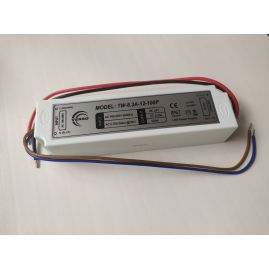
- Output power: 100 W
- Output voltage: 12V

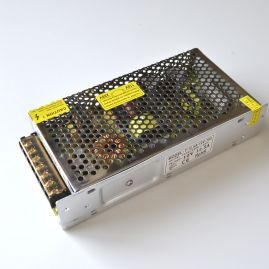
- Output power: 150 W
- Output voltage: 12V

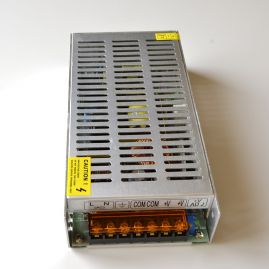
- Output power: 200 W
- Output voltage: 12V

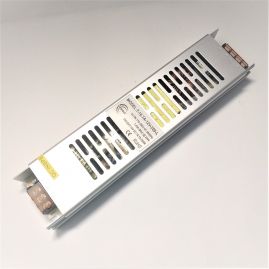
- Output power: 200 W
- Output voltage: 12V
- Output power: 240 W
- Output voltage: 12V

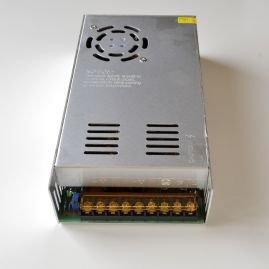
- Output power: 360 W
- Output voltage: 12V