
LED Light: Modern Lighting Standard
LED technologies have become an integral part of everyday life, replacing outdated light sources. Among all the solutions, LED lights are the most popular, combining energy efficiency, durability and modern design. These devices are used everywhere - in homes, offices, factories, public spaces and outdoors.
In this article, we will consider what an LED light is, its advantages, main types, areas of application and recommendations for selection.
What is an LED light?
An LED light is a lighting device that uses light-emitting diodes (LEDs) as a light source. They can be built directly into the device body or installed on replaceable modules.
The design of such lamps can include:
- aluminum or plastic body,
- diffuser,
- built-in driver (power supply),
- fastening elements (clips, brackets, cables),
- sometimes - dimmers or motion sensors.
Advantages of LED lamps
1. Energy efficiency
LED lamps consume 70-90% less electricity than incandescent lamps, while providing similar or even brighter light.
2. Durability
The average service life of an LED lamp is from 30,000 to 50,000 hours, which is equivalent to 10-15 years of operation without replacement.
3. Safety
The lamps do not heat up to high temperatures, do not contain mercury or other toxic substances, and do not emit UV or IR radiation.
4. Light quality
Modern lamps provide uniform illumination, high color rendering, and no flickering - this is especially important for eye health.
5. Versatility
LED lamps are available in a wide range of shapes, sizes, and types - from spotlights to street floodlights and LED panels.
Main types of LED luminaires
1. Built-in
Installed in suspended ceilings. Used in offices, retail spaces, residential interiors.
2. Surface-mounted
Mounted on the ceiling or wall surface. Easy to install and come in a variety of designs.
3. Pendant
Often used in interiors with high ceilings. Suitable for offices, cafes, loft spaces.
4. Spot
Compact models for local lighting, for example, in the kitchen, bathroom or dressing room.
5. Outdoor and industrial
High-power models with protection from moisture, dust, mechanical damage. They are used on facades, warehouses, parking lots and roads.
Application areas
- Residential premises. The lamps are used in bedrooms, living rooms, kitchens, bathrooms. Soft warm light (2700-3500K) helps create a cozy atmosphere.
- Offices and work areas. Cold or neutral light (4000-6000K) improves concentration and reduces fatigue.
- Retail and exhibition halls. Bright directional light helps focus attention on a product or exhibit.
- Educational institutions. Uniform lighting reduces eye strain and improves student performance.
- Street and park lighting. LED floodlights and street lamps provide safety and durability with minimal maintenance costs.
What to look for when choosing an LED lamp?
1. Power and luminous flux
Power is selected based on the area of the room. For example, for a room of 10 m2, a lamp with a power of 10-12 W with a brightness of 1000-1200 lm is suitable.
2. Color temperature
- Warm light (2700-3500K) - for relaxation and living rooms;
- Neutral (4000-4500K) - universal, suitable for most rooms;
- Cold (6000K and above) - for industrial and commercial facilities.
- CCT (DW/WW) luminaires - allow you to select the desired color temperature using a remote control.
- RGBW or MC - Contain not only white LEDs for everyday lighting, but also colored ones for special moments (stage lighting, festive events…)
3. Color rendering index (CRI)
For high-quality rendering of shades, the recommended indicator is not lower than 80 Ra.
4. Protection class
- IP20-IP33 is sufficient for indoor use;
- IP65 and higher for bathrooms and outdoors.
5. The presence of a dimmer or sensors
Brightness control, automatic on/off increase convenience and economy.
There are models controlled by a remote control or a standard Triac dimmer. There are models compatible with certain types of smart home systems (Dali, KNX, Tuya…)
6. Manufacturer and warranty
Well-known brands provide a warranty from 2 to 5 years and use high-quality components, which affects the service life.
Installation and connection
Installation of the LED lamp depends on its type.
- Built-in models require a suspended ceiling and an accurate cut-in hole.
- Surface-mounted can be fixed to any flat surface.
- Suspended are installed on cables or rods, adjustable in height.
Connection is carried out through a driver that stabilizes the voltage. Most lamps are designed to be powered by a 220 V network.
Conclusion
LED lamps are a modern, economical and reliable way to organize lighting. They are suitable for both domestic and commercial use, providing high-quality light, minimal operating costs and a high level of comfort.
When choosing a lamp, focus on the type of room, brightness requirements, color temperature and operating conditions. Thanks to the wide range, you can always find the optimal solution - from a simple spot model to a designer pendant lamp.


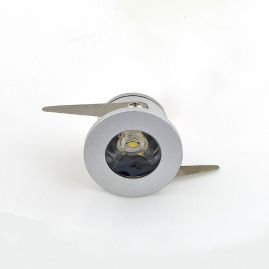
- Power consumption, W: 1 Вт
- Luminous flux, lm: 70 Лм
- Dust and moisture protection: IP 20
- Beam angle: 30°

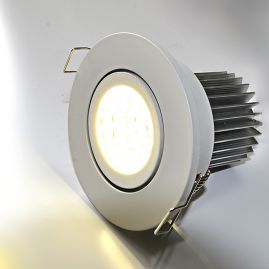
- Power consumption, W: 5 Вт
- Luminous flux, lm: 340-360 Лм
- Dust and moisture protection: IP 20
- Beam angle: 80°

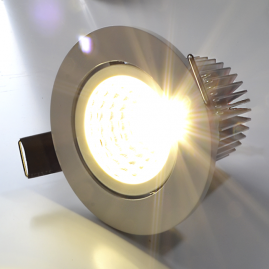
- Power consumption, W: 7 Вт
- Luminous flux, lm: 480-500 Лм
- Dust and moisture protection: IP 20
- Beam angle: 80°

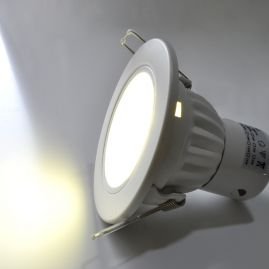
- Power consumption, W: 3 Вт
- Luminous flux, lm: 200-230 Лм
- Dust and moisture protection: IP 20
- Beam angle: 160°

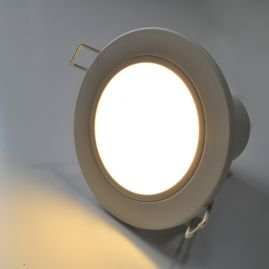
- Power consumption, W: 5 Вт
- Luminous flux, lm: 340-360 Лм
- Dust and moisture protection: IP 20
- Beam angle: 160°

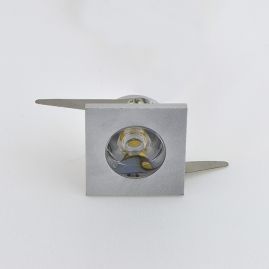
- Power consumption, W: 1 Вт
- Luminous flux, lm: 70 Лм
- Dust and moisture protection: IP 20
- Beam angle: 30°

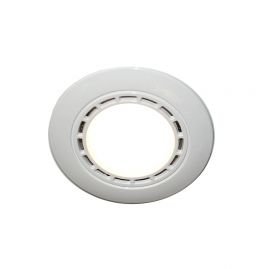
- Power consumption, W: 7 Вт
- Luminous flux, lm: 510-560 Лм
- Dust and moisture protection: IP 20
- Beam angle: 80°

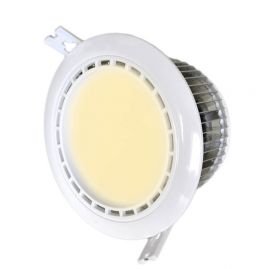
- Power consumption, W: 12 Вт
- Luminous flux, lm: 1100-1050 Лм
- Dust and moisture protection: IP 20
- Glow color: Дневной белый(DW) 1100 Люмен, Теплый белый (WW) 1050 Люмен
- Beam angle: 80°

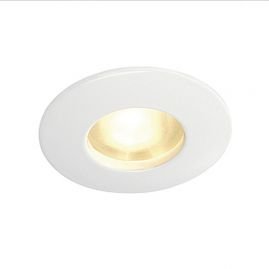
- Dust and moisture protection: IP 65

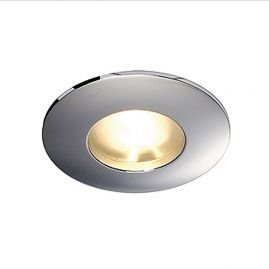
- Dust and moisture protection: IP 65
